Products
Packages
Custom Services
7 Things to Prep Before Hiring a Branding Agency
S9 · Sage9 Creative
October 15, 2026
You’ve been running your business for a while now. The work is good. Customers refer you. But the logo came from a favor, the website is a few years behind, and every time someone asks “do you have a card?” you wince a little.
So you’re thinking about hiring a branding agency. Smart. It’s also a big decision, and a few things can quietly wreck it.
Here’s the part few agencies mention during the sales call: how well a brand project goes depends heavily on you. A good agency brings the craft. You bring the inputs. When a project stalls, it’s rarely because the design was hard. It’s because a login couldn’t be found, the photos never showed up, or a decision sat for two weeks.
Get these seven things ready first and you’ll move faster, pay for fewer revisions, and end up closer to what you pictured.
1. Decide who has the final say
Every project needs one person who approves. That might be you, or you and a business partner. Others can weigh in. Your spouse, your office manager, and your best customer can all have opinions. But if three people have to agree on every logo, you’ll get the average of everyone’s taste, and it’ll take three times as long. If someone besides you needs to sign off, get them in the room at the start, not at the revision stage.
2. Round up every login
A new site can’t launch, and a lead system can’t connect, without access to the accounts behind them. Tracking down credentials mid-project is one of the easiest ways to lose weeks. Put everything into a password manager you can share before kickoff. Most access your agency needs include:
Domain registrar Website hosting Google Business Profile Social accounts (Facebook, LinkedIN, X, Instagram, etc.) Your CRM or estimating software Email platformAdditionally, find out who actually owns your domain. For a lot of owners it’s the old web guy, a relative, or an email address they stopped checking years ago.
3. Collect real photos of your real work
Stock photos tell customers nothing about you. Photos of your finished jobs, your crew, your trucks, and your shop tell them a lot. Dig through your phone.
Ask your team to send what they’ve got. Before-and-afters are gold. They don’t need to be professional. A good agency will work with what exists and tell you where a shoot is worth paying for.
Photos are the item most likely to be “coming this week” for a month. Start collecting now.
4. Gather everything you already have
Old logos. Business cards. Invoices, estimate templates, signs, a decal on a truck, a shirt someone made for the crew. If you can find the original design files, not just a screenshot, grab those too. You’re not trying to keep any of it. You’re showing an agency everything that currently carries your name, because that’s what the new brand has to replace. Original files can save you real money, so look before you assume they’re gone.
5. Make two lists of competitors
The first list is brands you admire—and they don’t have to be in your industry. The second is the competitors who keep taking your jobs, with an honest note on why you think they win. This does more work than a mood board. Your frustrations show where the brand has to work harder. Your admiration shows your taste. You already know who’s beating you. Say the name.
6. Know your numbers and your best customer
What does your ideal job look like? What’s your average ticket? Where do your leads come from right now? Which customers do you wish you had ten more of? Which ones do you dread? A brand isn’t decoration. It exists to attract a specific kind of buyer and filter out the wrong ones. If you can’t say who you’re aiming at, the agency will have to guess. Come with honest answers. If any of it is sensitive, ask how it’ll be handled before you share it.
7. Decide who has the final say
This is the unglamorous one, and it decides more projects than anything else. A brand build runs on feedback loops. You get a draft, you respond, it gets refined. If each loop takes you a week, a 12-week project becomes a 24-week project. If you reply within a couple of days, the schedule holds. Before you sign, look at the next three months and ask whether you can give this real attention. If you’re about to hit your busy season, say so before you start, so the work can be planned around it. Starting when you’re slammed and then going quiet costs more than starting a month later.
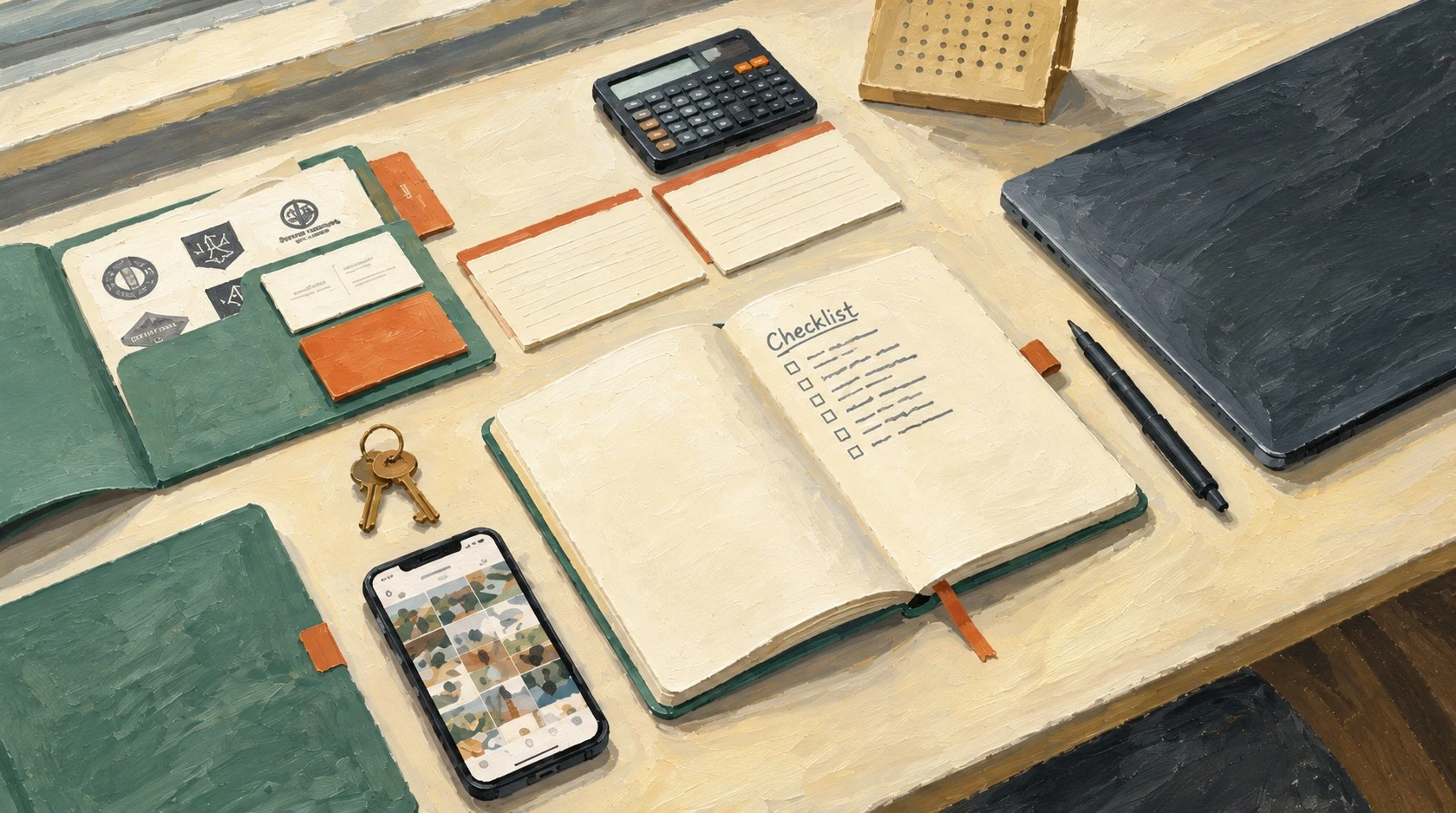
Your checklist
Before kickoff, have these ready:
One person with final say Every login in one place Real photos of real work Everything you already have Your admired brands and your rivals Your numbers and your best customer Time to respond quicklyYou don’t need to be a perfect client. You run a business, and nobody expects you to be free. But a project goes better when you treat this list like a deadline, and the agency worth hiring will tell you the same.
© 2026 Sage Nine Creative. All Rights Reserved.
Services
Privacy Policy